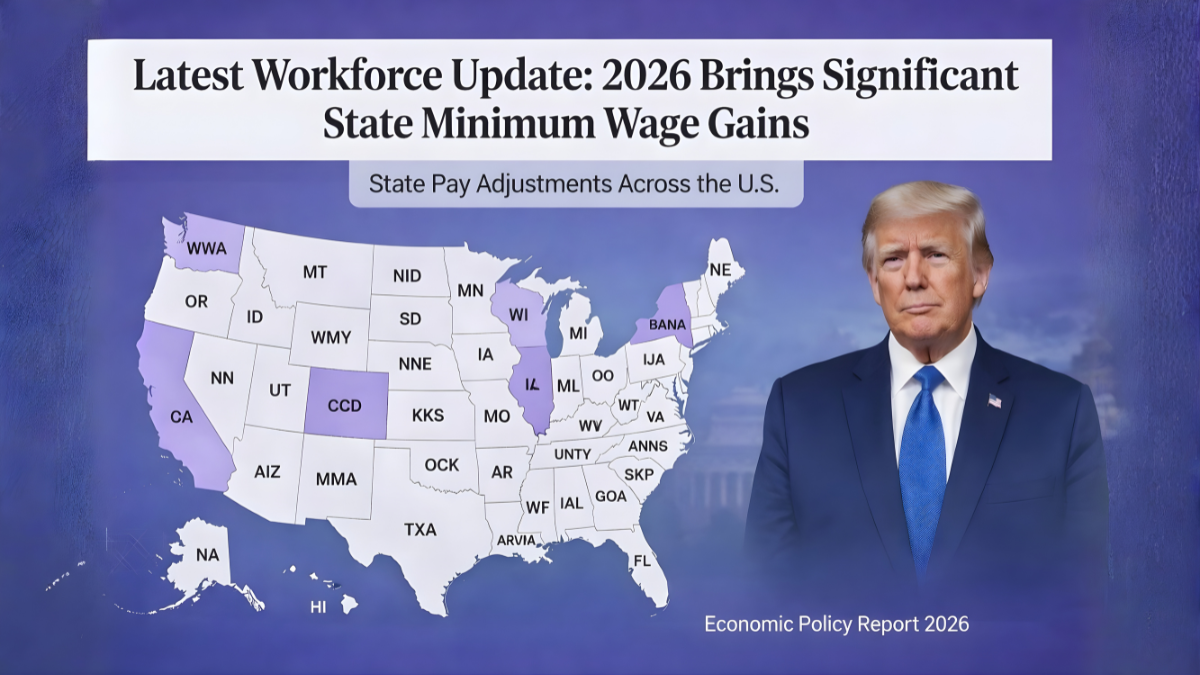
A significant workforce update in 2026 is bringing notable minimum wage increases across multiple U.S. states, reshaping pay structures for millions of workers. The adjustments reflect ongoing efforts to address inflation, cost-of-living pressures, and labor market competitiveness as states move independently to raise wage floors beyond the federal baseline.
Why 2026 Is a Big Year for Minimum Wage Changes
Several states have implemented scheduled increases or inflation-based adjustments that automatically raise minimum wage levels at the start of 2026. These changes are part of previously approved legislation aimed at gradually lifting wage floors over multiple years to support workers facing rising living expenses.
Which Workers Benefit the Most
Hourly employees in retail, hospitality, food service, healthcare support, and entry-level roles are among the primary beneficiaries. In states with aggressive wage schedules, workers may see noticeable increases in take-home pay, particularly in metropolitan areas with higher living costs.
| Wage Update Area | 2026 Workforce Outlook |
|---|---|
| State Minimum Wage | Increased in multiple states |
| Federal Minimum Wage | Unchanged at current level |
| Automatic Indexing | Active in select states tied to inflation |
| Affected Workers | Hourly and entry-level employees |
| Oversight Authority | State labor departments |
How State Policies Differ From Federal Standards
While the federal minimum wage remains unchanged, many states have adopted higher wage floors or automatic indexing mechanisms. These policies allow wages to adjust annually based on inflation data, reducing the need for repeated legislative action.
Impact on Employers and Businesses
Businesses operating in states with higher minimum wages may face increased payroll costs in 2026. Some employers are adjusting pricing strategies, staffing models, or operational budgets to accommodate the higher wage requirements while maintaining competitiveness.
What Workers Should Expect Moving Forward
Employees should review updated state wage announcements and confirm their new hourly rate once increases take effect. Enforcement and compliance will be overseen by state labor agencies, with guidance and updated wage tables typically published through official channels.
Conclusion: The 2026 workforce update brings meaningful state-level minimum wage gains, increasing earnings for millions of hourly workers while reinforcing the trend of state-led wage policy reform.
Disclaimer: This article is based on state workforce announcements, scheduled wage adjustments, and publicly available labor policy information for 2026. Specific wage rates, implementation timelines, and employer obligations may vary by state. Workers and employers should consult official state labor department guidance for accurate and legally binding information.