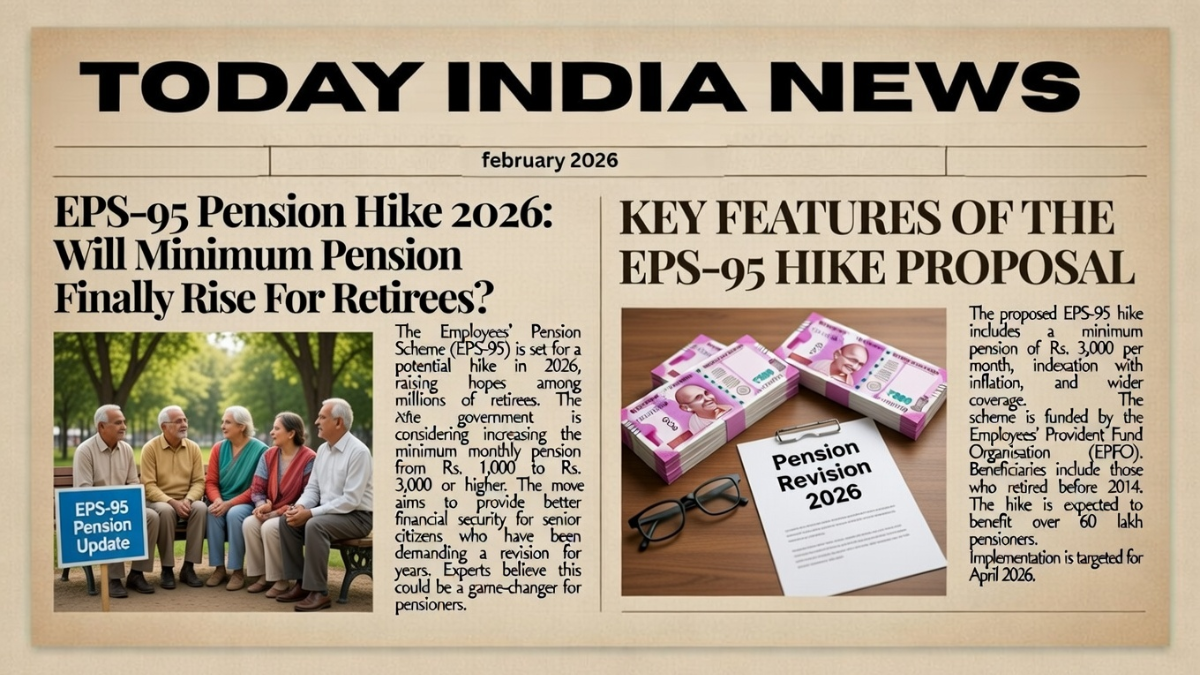
The debate around increasing the minimum pension under the Employees’ Pension Scheme 1995 is once again gaining momentum in 2026. For lakhs of retirees who depend on a fixed monthly pension, the long standing demand for a higher minimum payout remains a critical issue.
Currently, the minimum pension under EPS-95 stands at ₹1,000 per month, a figure many pensioners argue is insufficient in today’s inflation driven economy. With rising living costs and repeated representations from pensioners’ associations, the big question is whether 2026 will finally bring relief.
What Is EPS-95 and Who Benefits From It
The Employees’ Pension Scheme 1995 operates under the Employees’ Provident Fund Organisation and provides monthly pension benefits to eligible members after retirement. It covers private sector employees who contributed to EPF during their working years.
Under EPS-95, pension benefits are calculated based on pensionable salary and years of service. However, the minimum pension amount is fixed and does not automatically adjust for inflation.
This is the primary concern for retirees seeking reform.
Why Pensioners Are Demanding a Hike
For years, pensioners’ associations have demanded that the minimum pension be increased from ₹1,000 to at least ₹7,500 per month along with dearness allowance adjustments.
The key reasons behind this demand include:
Rising medical expenses
Higher cost of essential commodities
Lack of regular cost of living adjustments
Financial hardship among elderly pensioners
Many retirees argue that ₹1,000 per month does not provide meaningful financial support in 2026.
Government’s Position So Far
While discussions and representations have taken place multiple times, there has been no official confirmation of a minimum pension increase as of now.
Policy changes under EPS require government approval and financial allocation. Any hike would have significant budget implications, as lakhs of pensioners fall under the scheme.
In recent years, authorities have focused more on procedural reforms and higher pension calculation options rather than revising the minimum pension floor.
Possibility of a Pension Revision in 2026
Speculation about a possible revision often increases ahead of budget announcements or parliamentary sessions. However, without a formal notification, retirees should treat such discussions cautiously.
If a revision is approved, it would likely be officially announced with clear implementation timelines and eligibility guidelines.
Higher Pension Option Under EPS
Separately, the higher pension option allows eligible members to receive pension based on actual salary contributions instead of the capped wage limit. This option is subject to specific eligibility conditions and application procedures.
However, it does not automatically change the minimum pension for all retirees.
Financial Impact of a Potential Hike
If the minimum pension is increased, it could provide significant relief to economically vulnerable retirees. However, funding such an increase would require substantial financial resources.
Balancing fiscal responsibility with social welfare remains a key policy challenge.
What Pensioners Should Do Now
Retirees should:
Monitor official notifications from EPFO and government sources
Avoid relying on unverified social media claims
Review their eligibility for higher pension options
Stay informed about budget announcements
Being aware of confirmed updates helps avoid confusion and unrealistic expectations.
Conclusion
The demand for an EPS-95 pension hike in 2026 reflects the genuine financial concerns of retirees. While discussions continue, there is no official confirmation yet of a minimum pension increase.
Retirees should remain informed and rely only on verified government announcements for accurate updates. A formal decision, if taken, will be clearly communicated through official channels.
Disclaimer: This article is based on publicly available information and ongoing discussions. No official announcement has been made regarding an increase in the EPS-95 minimum pension at the time of writing.