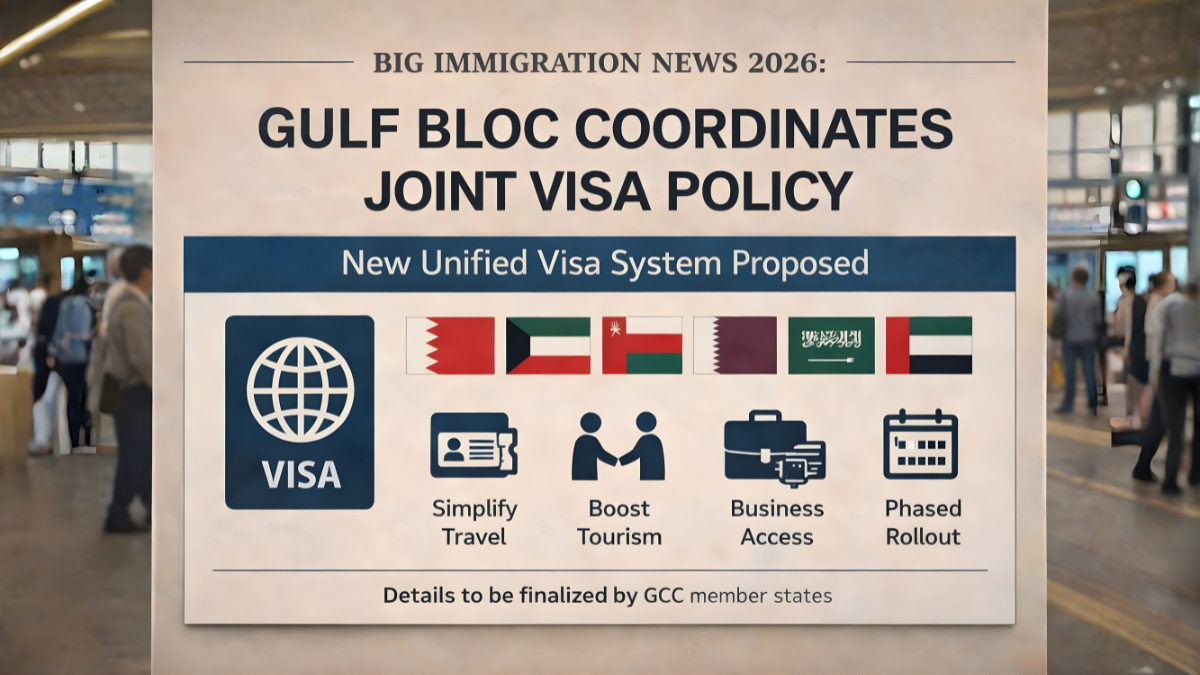
In a significant immigration development for 2026, Gulf countries are coordinating efforts to introduce a joint visa policy aimed at simplifying travel, boosting tourism, and strengthening regional cooperation. The move signals a potential shift toward streamlined entry rules across participating nations, making cross-border movement easier for visitors and business travelers.
What the Joint Visa Policy Means
The coordinated visa framework would allow eligible travelers to enter multiple Gulf countries under a single application or unified permit. This approach aims to reduce administrative burdens, eliminate repetitive visa procedures, and promote regional tourism and investment flows.
Which Countries Are Involved
The policy discussions involve members of the Gulf Cooperation Council, which includes Saudi Arabia, the United Arab Emirates, Qatar, Kuwait, Bahrain, and Oman. Each country maintains sovereign control over immigration matters, but coordination could create standardized entry conditions.
| Policy Area | 2026 Joint Visa Outlook |
|---|---|
| Participating Bloc | Gulf Cooperation Council |
| Visa Type | Coordinated or unified entry framework |
| Objective | Simplify travel and enhance regional mobility |
| Target Groups | Tourists, business visitors, investors |
| Implementation Timeline | Phased rollout under discussion |
Why the Gulf Bloc Is Coordinating Now
Officials have cited economic diversification strategies, rising tourism demand, and regional integration goals as reasons for aligning visa policies. A unified approach could make the region more attractive to international travelers who currently navigate separate visa systems for each destination.
Potential Benefits for Travelers and Businesses
A joint visa policy could reduce travel costs, shorten application timelines, and encourage multi-country itineraries. Business travelers may benefit from simplified access across regional markets, while tourism sectors could see increased cross-border activity.
What Happens Next
While coordination has been announced, final details such as visa duration, eligibility criteria, and application procedures are expected to be clarified through official government statements. Implementation may occur gradually as member states align administrative systems.
Conclusion: The Gulf bloc’s coordinated visa initiative in 2026 marks a major step toward regional travel integration, potentially simplifying entry procedures for tourists and business visitors alike.
Disclaimer: This article is based on official announcements and publicly discussed immigration coordination efforts within the Gulf region for 2026. Final visa rules, eligibility criteria, and implementation timelines may vary depending on member state approvals and regulatory frameworks. Travelers should rely on official government communications for accurate and legally binding information.