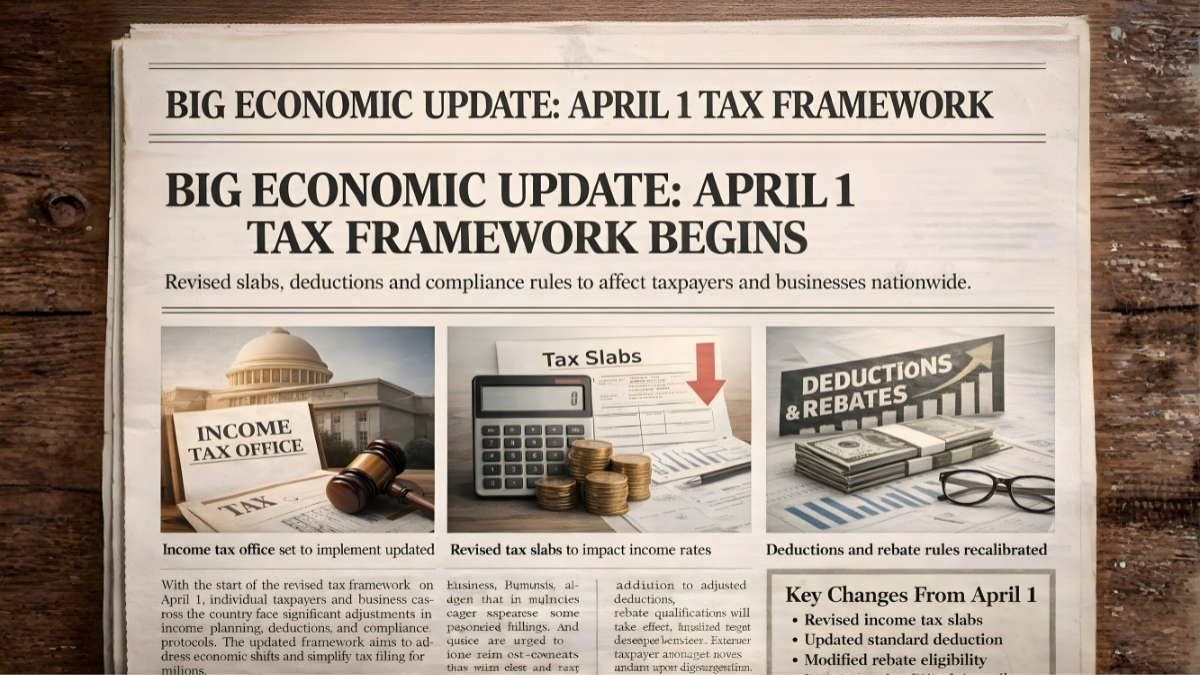
April 1 marks the official beginning of a revised tax framework that could significantly influence individual taxpayers, salaried employees, and businesses. As the new financial year begins, updated slabs, deduction structures, and compliance requirements are expected to reshape income planning strategies and take-home earnings across the country.
Why the Tax Framework Was Revised
Governments periodically revise tax systems to align with inflation trends, economic growth targets, and revenue planning. The April 1 update aims to simplify filing procedures while offering calibrated relief to certain income groups. Policymakers intend to balance fiscal discipline with taxpayer support, especially amid evolving economic conditions.
Impact on Salaried Individuals
Salaried taxpayers may notice changes in their monthly take-home pay depending on slab adjustments and deduction rules. Employers are required to incorporate the revised framework into payroll systems from the start of the financial year. Choosing between the old and new tax regime, where applicable, could influence overall tax liability.
| Tax Component | Key Change From April 1 |
|---|---|
| Income Tax Slabs | Adjusted rates or revised thresholds |
| Standard Deduction | Modified limits under new regime |
| Rebate Provisions | Updated eligibility conditions |
| Filing Compliance | Enhanced digital reporting norms |
| Corporate Tax | Possible refinements in structure |
Changes in Deductions and Rebates
The updated structure may revise standard deductions, rebate limits, and exemptions linked to investments or savings instruments. Taxpayers are encouraged to reassess financial planning decisions, including insurance premiums, retirement contributions, and housing-related deductions, to optimize benefits under the new system.
Compliance and Digital Monitoring
Tax authorities continue strengthening digital compliance and reporting mechanisms to reduce discrepancies and streamline returns. The framework aligns with ongoing modernization efforts led by the Income Tax Department to promote transparency and faster processing of refunds and assessments.
Business and Corporate Adjustments
Businesses may experience refinements in corporate tax provisions or compliance norms. Updated reporting standards could require companies to review accounting practices and ensure timely disclosures under the revised structure.
Conclusion: The April 1 rollout of the revised tax framework signals a significant financial reset for the new year, influencing income calculations, deductions, and compliance obligations for individuals and businesses alike.
Disclaimer: This article is based on publicly discussed tax framework updates and expected financial year revisions. Actual slab rates, deductions, and compliance rules may vary depending on official government notifications. Taxpayers should consult certified professionals or official tax department releases for accurate and legally binding information.