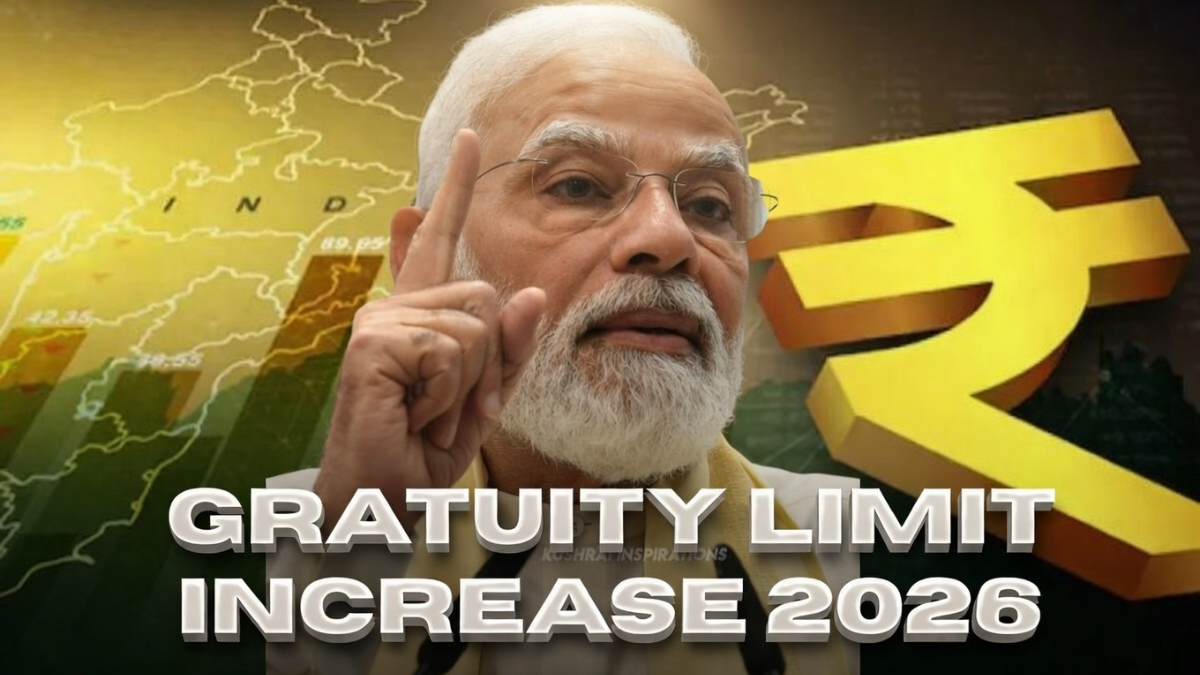
The possibility of a gratuity limit increase in 2026 is generating strong interest among salaried employees across India. With rising salaries, longer careers and inflation pressures, many workers are asking whether the maximum tax free gratuity cap could finally be revised.
Gratuity plays a crucial role in long term financial security, especially for employees in the private and public sectors who complete years of continuous service. If the limit increases, it could significantly impact retirement planning.
What Is Gratuity and Who Is Eligible
Gratuity is a lump sum payment made by an employer to an employee who has completed at least five years of continuous service. It is governed by the Payment of Gratuity Act.
Employees become eligible for gratuity upon retirement, resignation, superannuation or in certain cases of disability. In the event of death, gratuity is paid to the nominee even if the five year condition is not met.
The gratuity amount is calculated based on last drawn salary and years of service.
Current Gratuity Limit Structure
As per existing rules, the maximum tax free gratuity limit for most employees is capped at ₹20 lakh. Any amount received beyond this limit may be subject to taxation depending on employment category.
The formula for gratuity calculation typically considers 15 days of salary for every completed year of service.
With salary levels increasing over time, many employees in higher pay brackets reach the current ceiling quickly.
Why There Is Demand for a Higher Limit
The demand for increasing the gratuity limit is driven by several factors:
Rising cost of living
Higher salary structures in private sector jobs
Inflation impact on retirement savings
Longer average working careers
Employee groups argue that the current cap does not fully reflect modern salary standards and retirement needs.
What a Gratuity Limit Increase Could Mean
If the gratuity ceiling is raised in 2026, employees nearing retirement could benefit significantly. A higher tax free cap would allow workers to retain more of their service based payout without additional tax liability.
This could strengthen retirement planning, especially for mid and senior level professionals in private companies.
However, any change would require formal government notification.
Will All Employees Benefit Equally
A revision in gratuity limits may benefit employees differently depending on salary levels and years of service.
Those with longer tenure and higher last drawn salaries would see a more noticeable impact compared to early career professionals.
It is also important to distinguish between statutory gratuity limits and employer specific schemes that may offer enhanced benefits.
Tax Implications of Gratuity Payments
Gratuity received within the prescribed limit remains tax free under current regulations. If the limit increases, the tax free threshold would adjust accordingly.
Employees should consult financial advisors when planning retirement payouts to understand tax obligations.
What Workers Should Do in 2026
Employees should:
Stay updated on official announcements
Review employment contracts regarding gratuity terms
Calculate estimated gratuity based on service years
Incorporate gratuity into long term retirement planning
Waiting for confirmed government notification is essential before assuming any revised cap.
Conclusion
The discussion around a gratuity limit increase in 2026 reflects the need to align retirement benefits with present economic realities. While no official confirmation has been issued yet, a potential revision could provide meaningful financial relief to long serving employees.
Workers should monitor verified updates and plan their retirement finances carefully.
Disclaimer: This article is based on publicly available information and policy discussions. Any change in gratuity limits will depend on official government notification and applicable regulations.