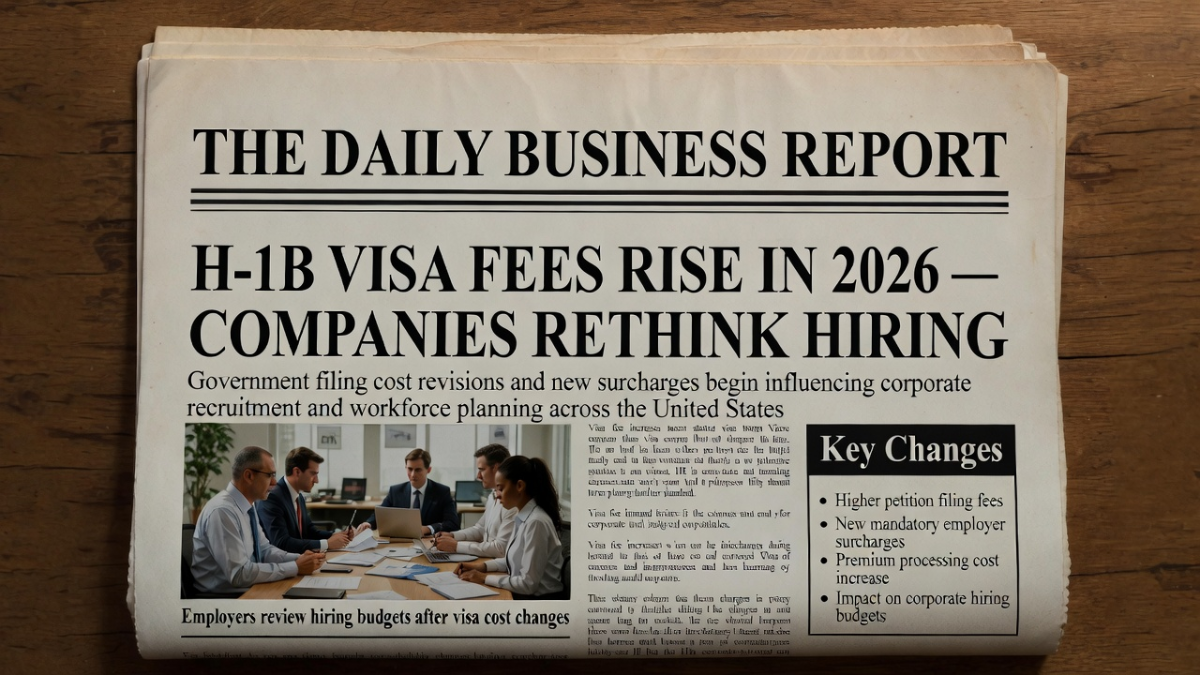
A major government fee revision tied to the H-1B visa program is beginning to influence corporate hiring strategies across the United States. With revised filing costs and associated compliance expenses rising, companies that rely on global talent are reassessing budgets, recruitment timelines, and workforce planning for 2026 and beyond.
Why the Government Revised H-1B Fees
The U.S. government periodically adjusts immigration-related fees to reflect administrative costs and policy changes. The recent revision increases the financial burden on employers sponsoring foreign professionals under the H-1B program. The aim is to improve processing efficiency and fund system upgrades, but the immediate effect is a noticeable rise in sponsorship expenses.
How Higher Costs Affect Employers
Companies that hire skilled foreign workers through the H-1B route now face significantly higher per-employee sponsorship costs. Large corporations may absorb the increase more easily, but startups and mid-sized firms are likely to rethink recruitment strategies. Some businesses may reduce the number of visa filings, while others may prioritize domestic hiring or expand offshore teams instead.
| Category | Updated Impact |
|---|---|
| Base Filing Fees | Increased petition filing costs |
| Fraud Prevention Fee | Revised mandatory surcharge |
| Asylum Program Fee | Additional employer contribution |
| Premium Processing | Higher expedited service cost |
| Corporate Impact | Adjusted hiring budgets and workforce planning |
Impact on Technology and Consulting Sectors
Industries such as technology, engineering, healthcare, and consulting depend heavily on specialized global talent. Fee increases can influence hiring cycles, project timelines, and long-term staffing plans. For firms that submit multiple applications annually, the cumulative financial impact becomes substantial.
Role of U.S. Immigration Authorities
The revised structure has been implemented under the oversight of U.S. Citizenship and Immigration Services, which manages petition processing and fee collection. The agency maintains that the changes are designed to sustain operational capacity and improve adjudication timelines, though businesses continue to evaluate cost efficiency.
Will This Reduce H-1B Demand?
Demand for H-1B visas remains strong due to the shortage of highly skilled professionals in certain fields. However, rising costs may shift how companies approach international recruitment. Some employers may reserve sponsorship for critical roles only, while others may invest more in remote global operations outside the U.S.
Long-Term Hiring Strategy Shifts
Beyond immediate budget adjustments, the fee revision may influence long-term corporate workforce models. Organizations could diversify talent acquisition channels, explore automation, or increase partnerships with global subsidiaries. The broader outcome will depend on economic conditions, labor shortages, and future immigration policy decisions.
Conclusion: The revised H-1B fee structure is reshaping corporate hiring decisions by increasing sponsorship costs and prompting companies to reevaluate workforce strategies in a competitive global talent market.
Disclaimer: This article is based on publicly available information regarding H-1B visa fee revisions and corporate hiring trends. Actual filing costs, policy implementation details, and employer obligations may vary based on official government regulations and future updates. Businesses should consult immigration professionals or official USCIS resources for accurate guidance.