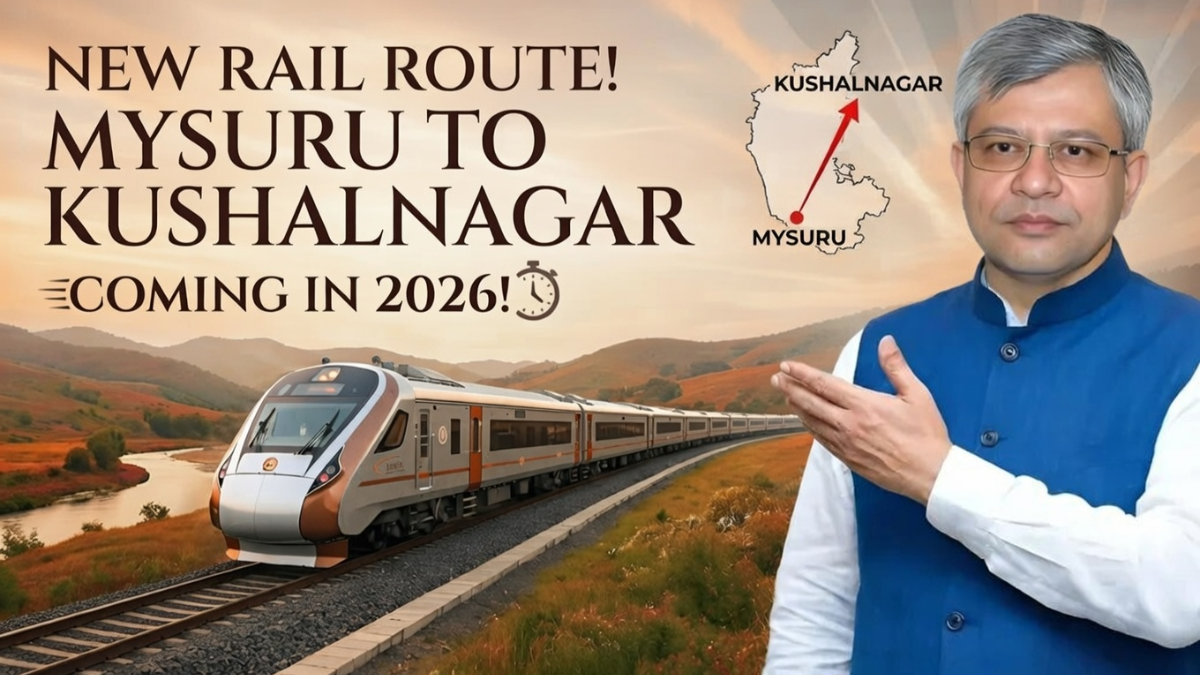
A major infrastructure update has emerged for Karnataka as the Mysuru–Kushalnagar Rail Line project moves forward in 2026. The proposed rail corridor, spanning 87.2 kilometers, is expected to significantly improve connectivity between Mysuru and the Coorg region, boosting tourism, trade, and regional development.
This long-awaited railway project has been in discussion for years and is now gaining renewed attention due to updated planning, cost estimates, and policy-level momentum.
Overview of the Mysuru–Kushalnagar Rail Line Project
The Mysuru–Kushalnagar rail line is a proposed new railway route aimed at connecting Mysuru city with Kushalnagar in Kodagu district. Currently, road transport is the primary mode of travel to Coorg, often affected by traffic congestion and weather conditions.
Once completed, this rail line is expected to offer a safer, faster, and more reliable travel option for passengers and goods.
Total Route Length and Alignment Details
As per the latest update, the total length of the proposed railway line is 87.2 km. The alignment is planned to pass through multiple towns and rural areas, ensuring broader regional connectivity.
The route has been designed keeping terrain challenges, forest areas, and environmental sensitivity in mind, which is why the planning and approval process has taken considerable time.
Estimated Project Cost and Funding
The estimated cost of the Mysuru–Kushalnagar rail project runs into several thousand crore rupees. The high cost is mainly due to land acquisition, bridges, earthwork, and environmental safeguards required along the route.
Funding is expected to be shared between the central government and the state, subject to final approvals and budget allocations under Indian Railways’ infrastructure expansion plans.
Authority Handling the Railway Project
The project comes under the purview of Indian Railways, which is responsible for feasibility studies, route surveys, and final execution. Detailed Project Reports and revised surveys play a crucial role before construction can begin.
Final implementation depends on approvals related to land, environment, and financial viability.
Current Status of the Project in 2026
As of 2026, the project is at an advanced planning and review stage. Survey work and feasibility assessments have been conducted earlier, and updates are being evaluated based on current cost structures and policy priorities.
Final decisions regarding execution timelines will depend on clearances, funding commitments, and political consensus.
Why the Project Is Important for Karnataka
The Mysuru–Kushalnagar rail line is seen as a game-changer for the Coorg region. It can significantly reduce travel time from Mysuru, promote tourism, and support local businesses.
Improved rail connectivity also helps in transporting agricultural produce and other goods more efficiently, contributing to regional economic growth.
Concerns and Challenges Linked to the Project
Despite its benefits, the project has faced resistance due to environmental concerns, especially since parts of the route may pass near ecologically sensitive zones.
Balancing development with environmental protection remains a key challenge, and authorities are expected to follow strict guidelines to minimize ecological impact.
What This Means for Local Residents
For residents of Mysuru, Kushalnagar, and nearby areas, the railway line promises better mobility and economic opportunities. Property values, tourism-related businesses, and employment prospects may see long-term growth once the project is executed.
However, land acquisition and construction phases may also bring temporary disruptions.
Conclusion
The Mysuru–Kushalnagar Rail Line Update 2026 highlights a crucial infrastructure project with an 87.2 km route that has the potential to transform connectivity in southern Karnataka. While challenges remain, progress in planning and renewed government focus indicate that the project continues to be on the development radar. If implemented carefully, it can deliver long-term benefits to both residents and travelers.
Disclaimer: Project cost, route alignment, and timelines are subject to official approvals and may change based on government decisions and environmental clearances.