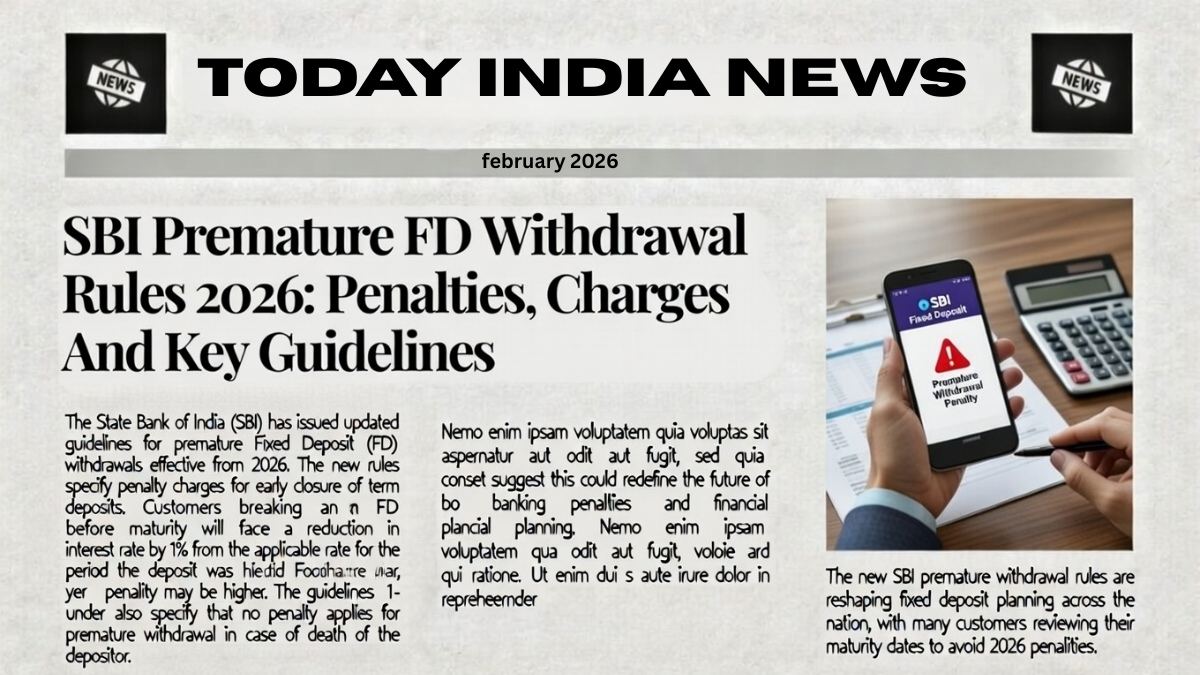
Fixed Deposits are considered one of the safest investment options in India, especially with trusted banks like State Bank of India. However, breaking an FD before maturity can lead to penalties and reduced interest earnings. In 2026, understanding SBI’s premature withdrawal rules is more important than ever as many investors look for liquidity amid changing financial conditions.
Before closing your FD early, here is a detailed breakdown of penalties, charges, and key guidelines.
What Is Premature FD Withdrawal
Premature withdrawal means closing your fixed deposit before the agreed maturity date. While SBI allows early closure in most cases, it does not come without consequences.
When an FD is withdrawn early, the interest paid is recalculated based on the actual period the deposit remained with the bank. In addition to that, a penalty rate may also apply.
Interest Recalculation Rules
If you break your FD before maturity, SBI recalculates interest based on the rate applicable for the tenure the deposit actually completed, not the originally booked tenure.
For example, if you opened a three year FD but close it after one year, the bank will apply the one year interest rate instead of the three year rate.
This can significantly reduce your expected returns.
Premature Withdrawal Penalty Charges
SBI generally charges a penalty on premature withdrawal. The penalty is typically a percentage deducted from the applicable interest rate.
The standard structure may include:
- A lower interest rate applied for the completed tenure
- A penalty deduction of up to 0.50 percent to 1.00 percent depending on deposit amount
- No interest if withdrawn before the minimum lock in period in certain cases
The exact penalty may vary depending on the deposit amount and prevailing bank policies in 2026.
Are There Any Exceptions
In some situations, penalties may not apply. These exceptions can include:
Premature withdrawal due to death of the depositor
Certain special FD schemes with no penalty clause
Bank specific promotional schemes
It is important to check the specific FD type before assuming penalty free closure.
Minimum Lock In Period Rules
Some FDs require a minimum lock in period, especially for tax saving deposits. Tax saving FDs usually have a five year lock in and cannot be withdrawn prematurely except in special cases like the depositor’s demise.
Regular FDs generally allow early withdrawal after a short initial period, subject to penalties.
Loan Against FD as an Alternative
Instead of breaking your FD, SBI allows customers to take a loan or overdraft against their fixed deposit. This option provides liquidity without losing the higher interest rate of the original deposit.
The loan amount is usually a percentage of the FD value and carries its own interest rate.
For short term financial needs, this may be a smarter option than premature withdrawal.
Tax Implications of Premature Withdrawal
Interest earned on FDs is taxable as per your income slab. If you close your FD early, interest earned until that point remains taxable.
If Tax Deducted at Source was applied, adjustments may be reflected in your final tax calculation.
Understanding the tax impact before withdrawal is important.
Who Should Avoid Premature Withdrawal
Investors aiming for stable returns and long term savings goals should avoid breaking FDs early unless absolutely necessary. Frequent premature withdrawals reduce overall earnings and weaken compounding benefits.
Emergency fund planning can help prevent the need for early closure.
Conclusion
SBI’s premature FD withdrawal rules in 2026 allow flexibility but come with interest recalculation and penalty charges. Depositors should carefully evaluate the financial impact before closing a fixed deposit early.
Exploring alternatives such as loans against FD may help preserve returns while meeting liquidity needs. Always confirm updated penalty rates and conditions directly with the bank before making a decision.
Disclaimer: Penalty rates and terms are subject to change as per bank policy. Customers should verify current guidelines with official SBI sources before initiating premature withdrawal.